


Ever tried fixing a leak with duct tape and crossed fingers? It might hold for a few minutes, until the pressure kicks in.
Industrial gaskets work under a bit more stress than your average patch job. From a high-temperature steam line to a chemically aggressive pipeline, choosing the wrong gasket can bring your entire system to a halt faster than you can say “shutdown.”
That’s why selecting the right gasket is about much more than shape and size.
It’s about knowing the job, understanding the conditions and working with experts who know their stuff. Steamline Engineering is here to break it all down. Saving you from learning this the hard way.
Application conditions and understanding your operating environment
Every industrial gasket lives in a specific environment, and that environment determines whether it performs or fails. When you’re selecting a gasket, don’t just focus on material. Start with the job site. Ask yourself what conditions it will be sealing against, and how extreme are they.
Temperature
Extreme heat can warp or degrade many materials. If you’re working in high-temperature environments (like steam lines or exhaust systems) rubber won’t cut it. Instead, materials like graphite or spiral-wound metal gaskets will offer more stability and a longer service life.
Pressure
Gaskets that perform well in low-pressure systems may buckle or extrude when pressure climbs. For high-pressure applications, look to tougher, durable options like metallic gaskets or reinforced composites. These are engineered to withstand extreme compression and support seal integrity over time.
Media compatibility
It’s not just about heat or pressure. What’s flowing through the system matters too. From acids to hydrocarbons to water, the media can break down incompatible gasket materials. PTFE, for example, performs well in chemically aggressive environments, while NBR might only suit basic water or oil seals.
In short: understanding your operating conditions is essential to selecting a gasket that seals reliably and safely.
Think environment first, then material.
Material selection is the heart of your gasket’s performance
If the gasket’s shape is the body, its material is the soul. And like any good soul, it needs to be a match for its environment.
- Rubber (NBR, EPDM, etc.): Great for general use, but not ideal for aggressive chemicals or high heat.
- Graphite: Excellent thermal and chemical resistance, especially in refinery or power plant settings.
- PTFE: Resistant to a wide range of chemicals and high temperatures.
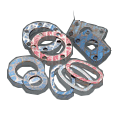
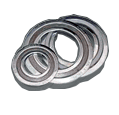
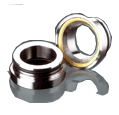
- Metallic: Think spiral-wound or ring-type joints. These are ideal for extreme conditions.
Steamline offers a wide variety of industrial gaskets, including composite designs that combine the benefits of multiple materials for specific performance outcomes.
Size and surface finish
If your gasket doesn’t fit like a glove, it won’t seal like one. Even minor imperfections in size or flange surface finish can lead to leaks.
- Accurate dimensions: Ensure the inner and outer diameters match precisely with your flange design.
- Surface finish: Too smooth or too rough a flange can affect sealing ability. For metallic gaskets, surface roughness is especially important.
- Bolt load: Incorrect gasket compression can ruin even the best material. Make sure it’s properly torqued.
Selecting the right gasket is a job for callipers, torque charts and people who know where to look.
Industry standards and certifications
Think beyond ticking boxes. Meeting Australian Standards like AS 4020 or ASME B16.20 ensures that your gaskets perform safely and consistently under specified conditions.
- Compliance testing: Look for third-party certifications that guarantee performance and reliability.
- Traceability: Good suppliers provide documentation, batch tracking and material data sheets.
- Application-specific ratings: Certain jobs, like drinking water or explosive atmospheres, have strict requirements. Make sure your gasket meets them.
At Steamline, we only stock industrial gaskets that meet or exceed all relevant standards. Because in this industry, shortcuts don’t pay off.
Choose a partner, not just a product
You wouldn’t call a random plumber to fix a high-pressure steam valve, so why take chances with your gasket supplier? When it comes to sealing reliability, choosing a knowledgeable, responsive partner will make a big difference.
Technical advice
Not sure which material suits a fluctuating-pressure, high-temperature system? A good supplier will help you evaluate the entire sealing application. At Steamline, we provide direct access to gasket specialists who can help with material choice, compliance requirements and sealing set design.
Custom options
Every application isn’t cookie-cutter. If you’re dealing with non-standard flanges, oblong ports or unusual bolt patterns, custom-cut gaskets may be your best (or only) option. We offer waterjet cutting, sealing sets and profile matching to deliver exactly what your system needs.
Australia-wide delivery
There’s no point selecting the perfect industrial gasket if it arrives late. Steamline ensures fast, reliable delivery across the country, so whether you’re in Brisbane or Bunbury, your system won’t be left waiting.
Steamline Engineering is here to help. With expert guidance, Australia-wide support and a full range of metallic and non-metallic options, we’ll make sure your next gasket is the right one. Reach out today, and let’s get your system sealed, sorted and back to work.